Installation

Lift Installation

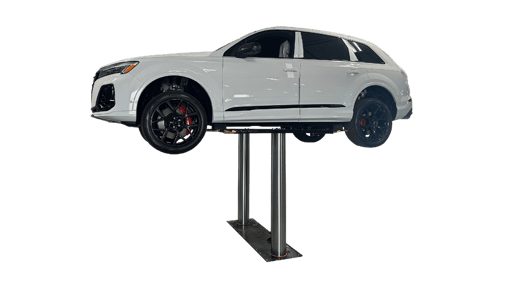
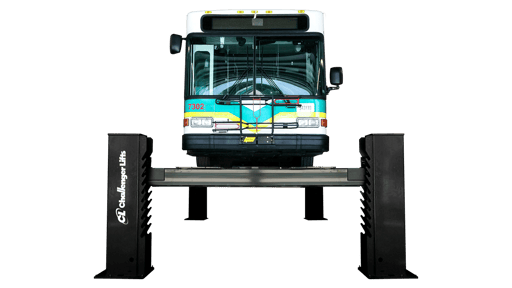
2-post, 4-post, inground, storage, and alignment. Challenger and Rotary factory-trained. NJ, PA, and NY.

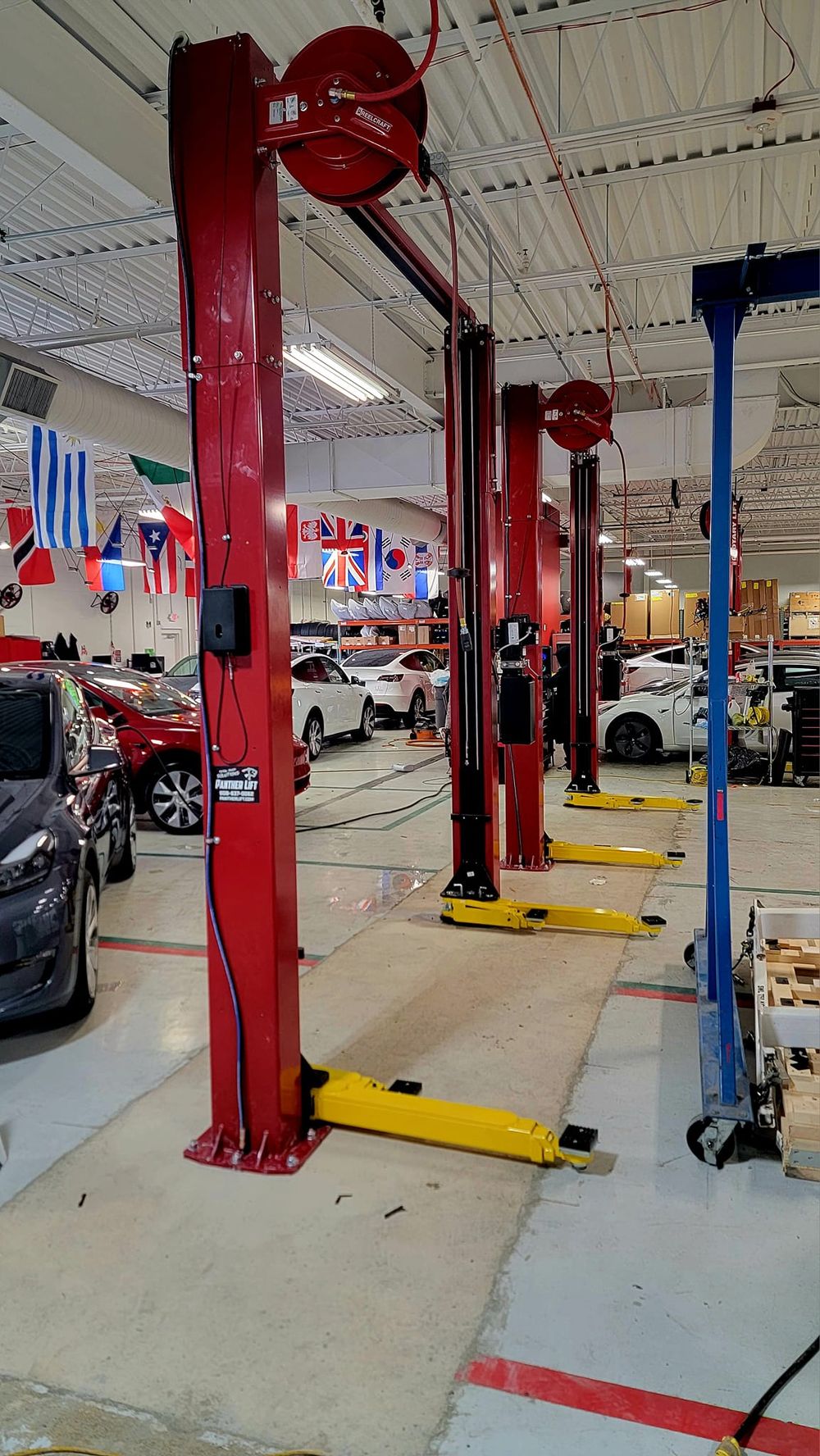
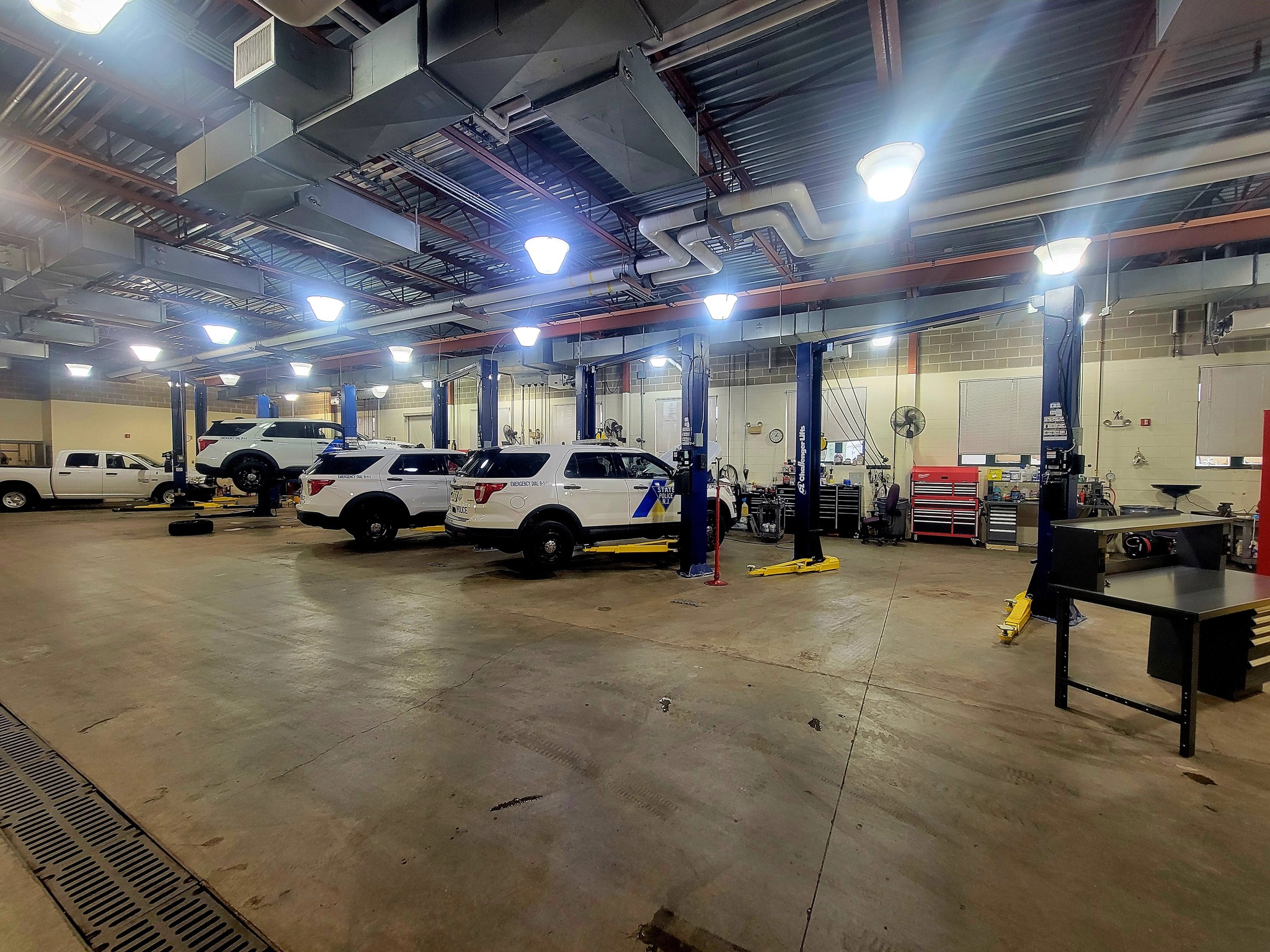
We install lifts in commercial shops, dealerships, quick lube bays, fleet facilities, body shops, and home garages. We sell Atlas and Challenger, but we install everything — BendPak, Rotary, Forward, Mohawk, whatever you've got. Our crew is factory-trained on Challenger and Rotary, OSHA 10 and 30 trained, CDL Class A licensed, and silica safety trained for concrete work.

We handle the whole job — slab assessment, concrete work if needed, electrical coordination, delivery, install, testing, and walkthrough. One crew, one point of contact. Most 2-post and 4-post jobs are done in a day. Owner Bo Fazio runs every project — you're not getting handed off to a subcontractor.

Every Install Includes

Slab & Site Assessment

Concrete thickness, PSI, rebar, ceiling height, electrical — checked before we commit to a model.

Delivery & Rigging

We deliver on our equipment. Unload, stage, and position — even in tight bays and difficult access points.

Full Mechanical Install

Anchoring, column setting, hydraulic, electrical hookup. Manufacturer torque specs, not guesswork.

Electrical

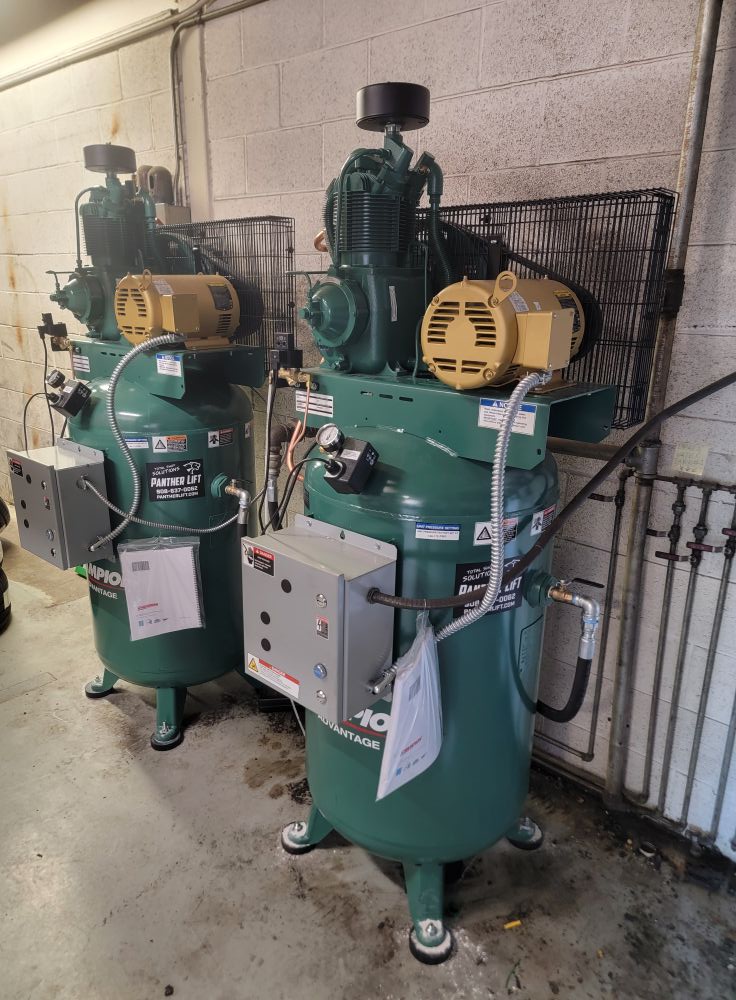
We spec what you need (110V or 220V, amperage, breaker size) and coordinate with your electrician or handle it directly.

Load Testing

Every lift gets cycled and load-tested before we leave. Locks, equalization, hydraulics — all checked under weight.

Clean Job Site

We handle all fluids, dispose of waste properly, and leave your shop cleaner than we found it. Environmental regs followed on every job.

Walkthrough

Operation, maintenance schedule, safety procedures. Documentation stays with the lift.


2-Post Lift Installation

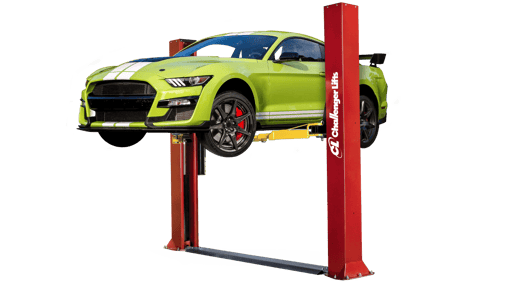
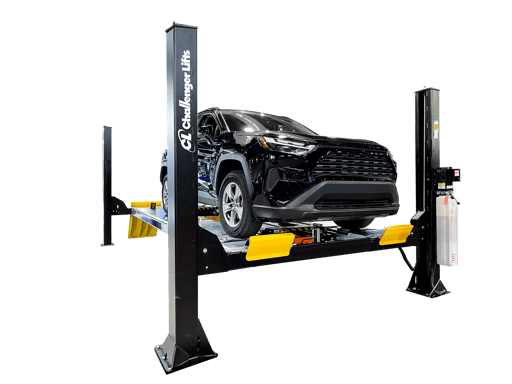
Overhead and baseplate configs. Symmetric and asymmetric arms. 9,000 to 12,000+ lbs.

The install is straightforward but unforgiving — columns get anchored directly into your slab, and if the slab isn't right or the columns aren't plumb, you'll know it every time you use the lift.

What we check before we drill:

  • Concrete: 4" minimum reinforced is standard, but it varies by model. We verify thickness, PSI, rebar, and cure. If it's questionable, we'll tell you before we touch it.
  • Ceiling: Overhead models need 11'10" to 12'. Baseplate models work down to 9'6". Heavy-duty (12K+) usually needs 12'+.
  • Electrical: Most 2-posts need a dedicated 220V circuit. We'll spec the exact breaker and wire gauge.
  • Bay layout: Column placement accounts for arm swing, door clearance, and adjacent bay spacing.

What the install looks like:

Anchor drilling → column setting (plumb and square) → crossbeam or baseplate → power unit mount → hydraulic and electrical → full cycle and load test. Half a day for a straightforward bay, full day if there's concrete or electrical prep involved.

Ceiling Clearance Reference

StyleMin. CeilingTypical Application
Overhead11'10" – 12'Commercial shops, high-ceiling garages
Baseplate9'6" – 10'Home garages, low-clearance buildings
Heavy-duty overhead12'+12,000 lb+ capacity, trucks and fleet

Models We Install

Atlas — 9KOHX (overhead, 9K), 9KBPX (baseplate, 9K), Platinum PVL10 (10K, ALI certified)

Challenger — CL10 Versymmetric series, CL12A (12K, adjustable column, PTEN Award winner). Quick Cycle, Dual-Point Controls, and EV-Ready packages available.

2-Post Installs


4-Post Service Lifts

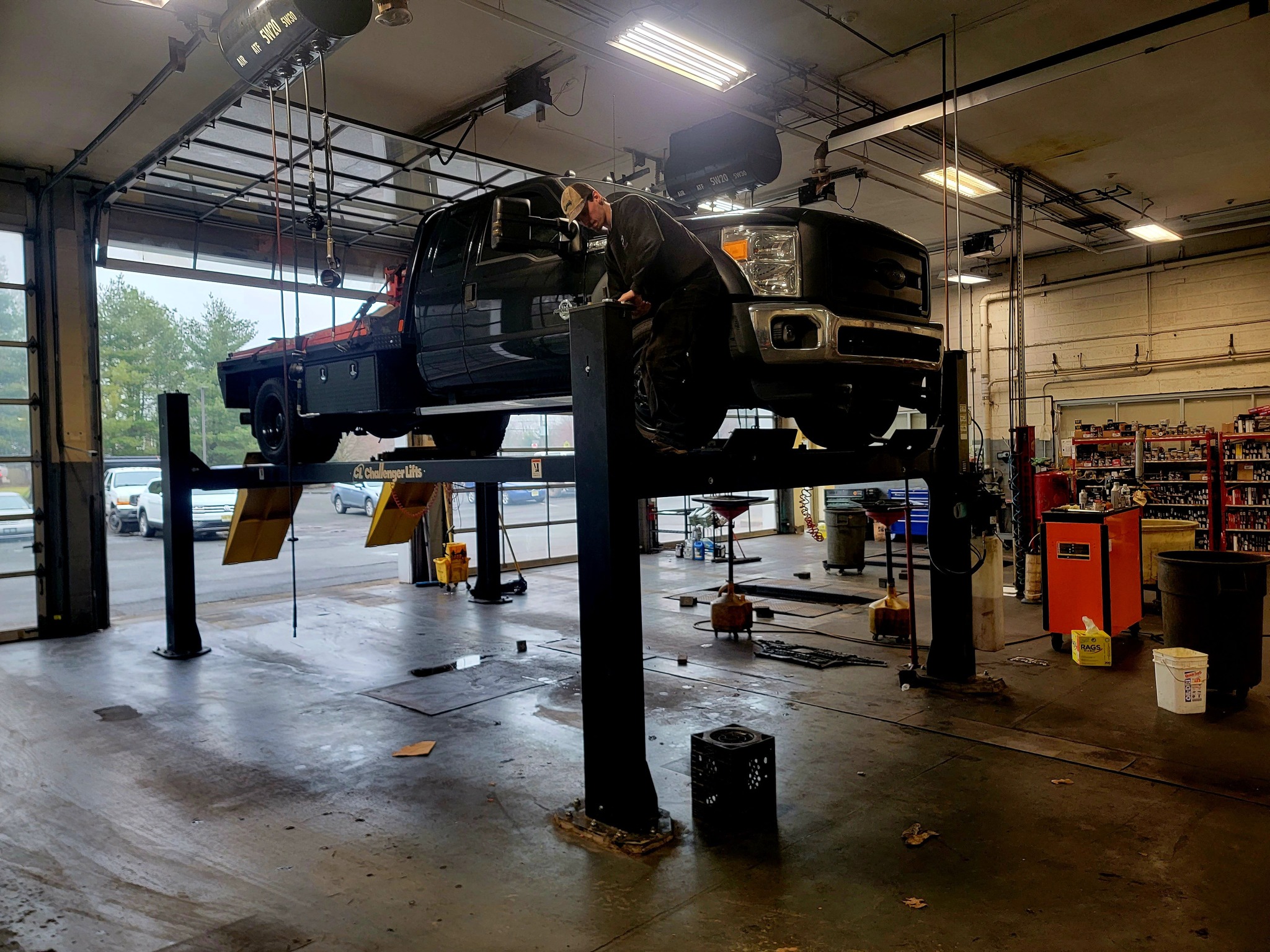
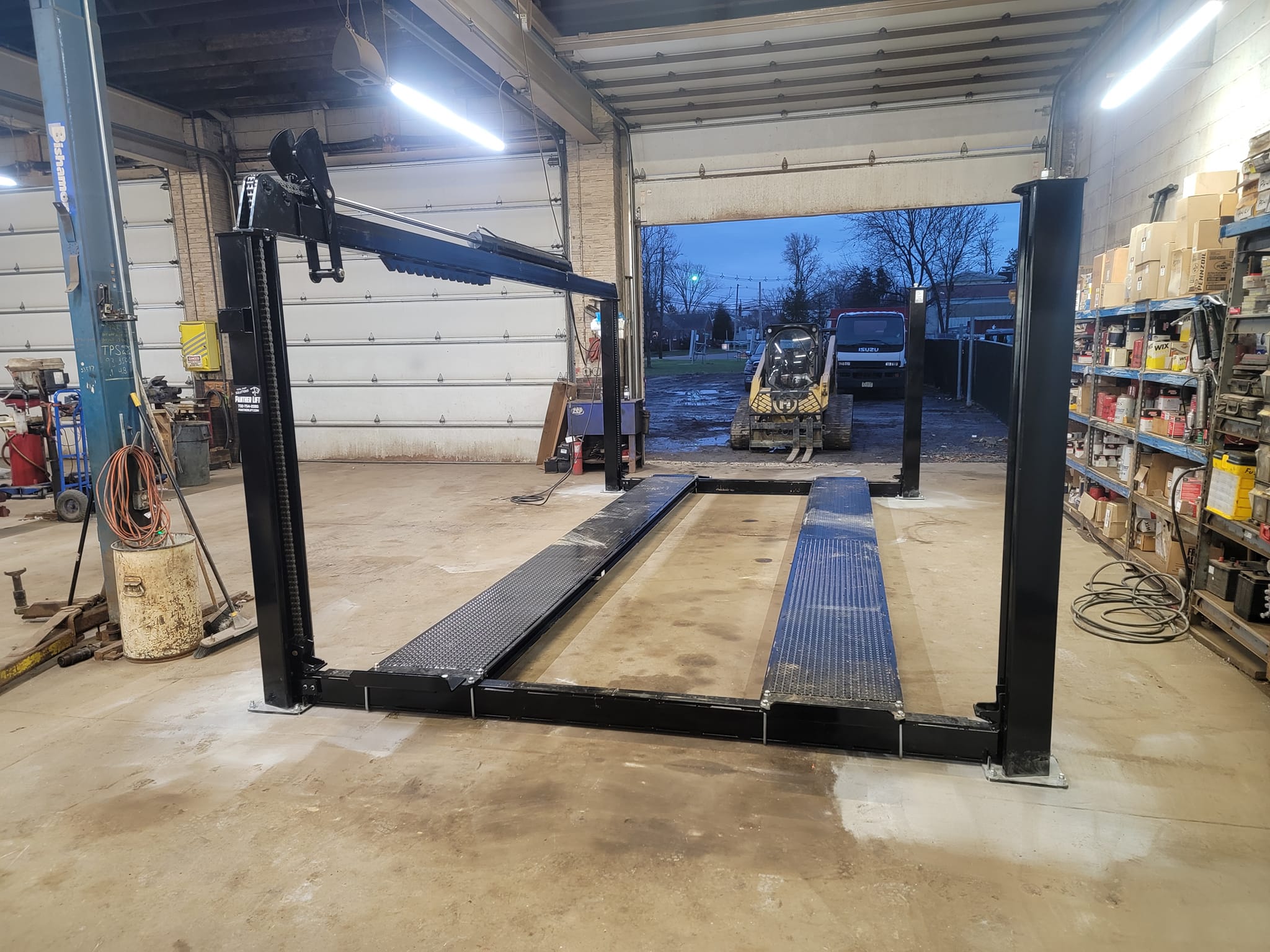
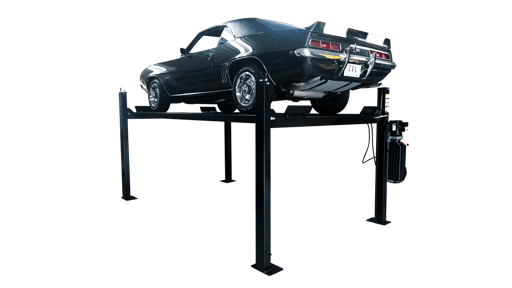
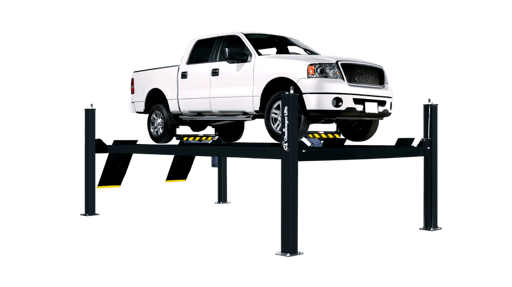
Drive-on, open-wheel access, full undercar work. This is what oil change shops, muffler shops, tire shops, and general service bays run when they need a vehicle in the air without arm swing getting in the way.

A 4-post service lift puts the vehicle on runways — drive on, position, raise. The wheels stay on the runways, giving you clear access underneath for exhaust, oil changes, inspections, undercoating, fluid services, and anything else that doesn't need the wheels off. Add rolling jacks and you've got wheel-off capability too.

Why shops run 4-posts:

  • No arm swing: Unlike a 2-post, there are no arms to position. Drive on and go. Faster vehicle cycling for high-volume bays.
  • Full undercar access: Open from all four sides underneath. Exhaust work, oil changes, inspections — no columns in the way.
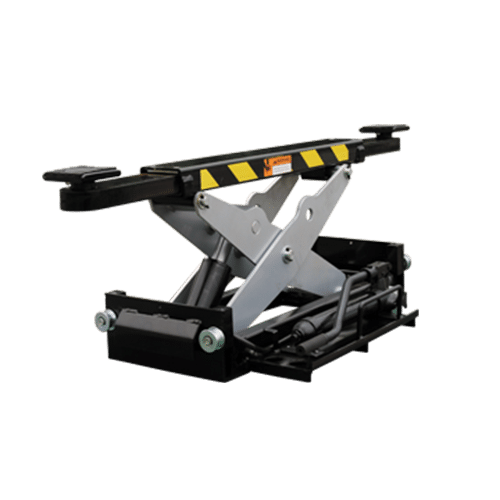
  • Rolling jacks: Optional rolling bridge jacks let you lift wheels off the runways for brake and tire work. One lift, two capabilities.
  • Heavier capacity: 4-posts commonly run 12K–14K+. Trucks, vans, fleet vehicles — no problem.

What the install looks like:

Same slab and electrical requirements as any lift. We assess the bay, verify the floor can handle the load at each post, confirm ceiling clearance for the raised vehicle, and run the electrical. Runway lifts go in fast — most installs are done in half a day to a full day.

Common 4-Post Service Setups

SetupModelsCapacityTypical Use
General serviceChallenger CL4P9, Atlas 412A9K – 12K lbsOil change, exhaust, inspections
Heavy-duty serviceChallenger 4P14, Atlas 414A14K lbsTrucks, vans, fleet
Service + wheel-offAny 4-post + rolling jacks9K – 14K lbsBrakes, tires, full service

Models We Install

Atlas — 412A (12K), 414A (14K). Commercial-grade runway lifts for service bays.

Challenger — CL4P9 (9K), 4P14 (14K commercial). Rolling jack packages, drip trays, and wheel alignment add-ons available.

4-Post Service Installs


Storage Lifts

Park one car on top, one underneath. This is how you double your garage space without building an addition. Storage lifts are for home garages and collector buildings — the goal is stacking vehicles, not working on them.

The lift itself is straightforward, but every garage is different — ceiling height, slab condition, electrical availability, door clearance. That's where most people get stuck, and that's what we sort out before anything gets delivered.

What we check in a residential garage:

  • Ceiling height: You need enough clearance for the lift at full rise plus the vehicle on top. A standard 8-foot garage ceiling won't work for most models. 10–12 feet is typical. We measure and confirm before you order.
  • Slab: Residential garage slabs are often 4" unreinforced — fine for some lifts, not enough for others. We check thickness, condition, and whether it'll take the load. If it needs work, we handle the concrete scope.
  • Electrical: Most storage lifts need 220V. A lot of home garages don't have it. We'll spec exactly what circuit you need so your electrician can run it, or we coordinate it.
  • Door clearance: The lift has to fit through the bay door, and vehicles need enough approach to drive on straight. Tight 2-car garages can work, but the layout matters.
  • Weight: The lift itself weighs 2,000–3,500 lbs depending on model, plus the vehicles. We verify the slab can handle the concentrated loads at each post.

Common Storage Setups

SetupModelsCapacityMin. Ceiling
Standard double-parkAtlas Garage PRO8000, Challenger CL4P77K – 8K lbs~10'
Truck / SUV storageAtlas PRO9000 EXT-L, Challenger CL4P9S-ER9K lbs~11–12'
Collector / low-profileModels with reduced rise height7K – 9K lbs~9–10'

Models We Install

Atlas — Garage PRO8000 (8K, standard for home storage), PRO9000 EXT-L (9K, extended runway for trucks and SUVs)

Challenger — CL4P7-ER (7K, extended rise), CL4P9S-ER (9K, extended rise). Caster kits, drip trays, and jack platforms available on all models.

Storage Lift Installs


Alignment Rack Installation

An alignment rack is a 4-post lift built for alignment work — turnplates in the front, slip plates in the rear, level runways, and mounting points for your alignment system's cameras or sensors. Same install fundamentals as a service 4-post, but the precision requirements are tighter.

What makes alignment installs different:

  • Floor leveling: The rack has to be dead level. If the floor isn't, we shim and adjust until it is. Alignment readings are only as good as the platform they're taken on.
  • Turnplate & slip plate integration: Recessed into the runways. They need to move freely under load and stay calibrated. We set them, verify travel, and confirm they're seated correctly.
  • Camera/sensor mounting: Whether it's a Hunter, John Bean, Hofmann, or other system, the targets or cameras need clear sightlines and rigid mounting. We coordinate with your alignment equipment vendor or install the mounts ourselves.
  • Approach and drive-on: Vehicles need a straight, level approach to the runways. If the bay layout doesn't allow it, we'll flag it during the site assessment.

Common Setups

ConfigurationWhat It IncludesTypical Use
Open-front alignment rack4-post + turnplates + slip platesTire shops, general service
Closed-front alignment rack4-post + turnplates + slip plates + rolling jacksDealership service lanes
Heavy-duty alignment14K+ 4-post + HD turnplatesTrucks, fleet, commercial
Retrofit / conversionTurnplates + slip plates added to existing 4-postShops adding alignment capability

Models We Install

Atlas — Platinum PVL14 (14K, ALI certified, alignment-ready)

Challenger — 4P14 (14K commercial), CL4P9S-ER with alignment packages. Flexible power unit placement on all models.

If you've already got a 4-post and want to add alignment capability, we can retrofit turnplates and slip plates into compatible models. Not every 4-post supports it — we'll tell you if yours does.

Alignment Rack Installs


Inground Lift Installation

Flush-mount. No columns, no runways on the floor. The mechanism lives in a concrete pit below the shop floor. When it's down, you'd never know it's there. This is what dealerships and high-volume shops run.

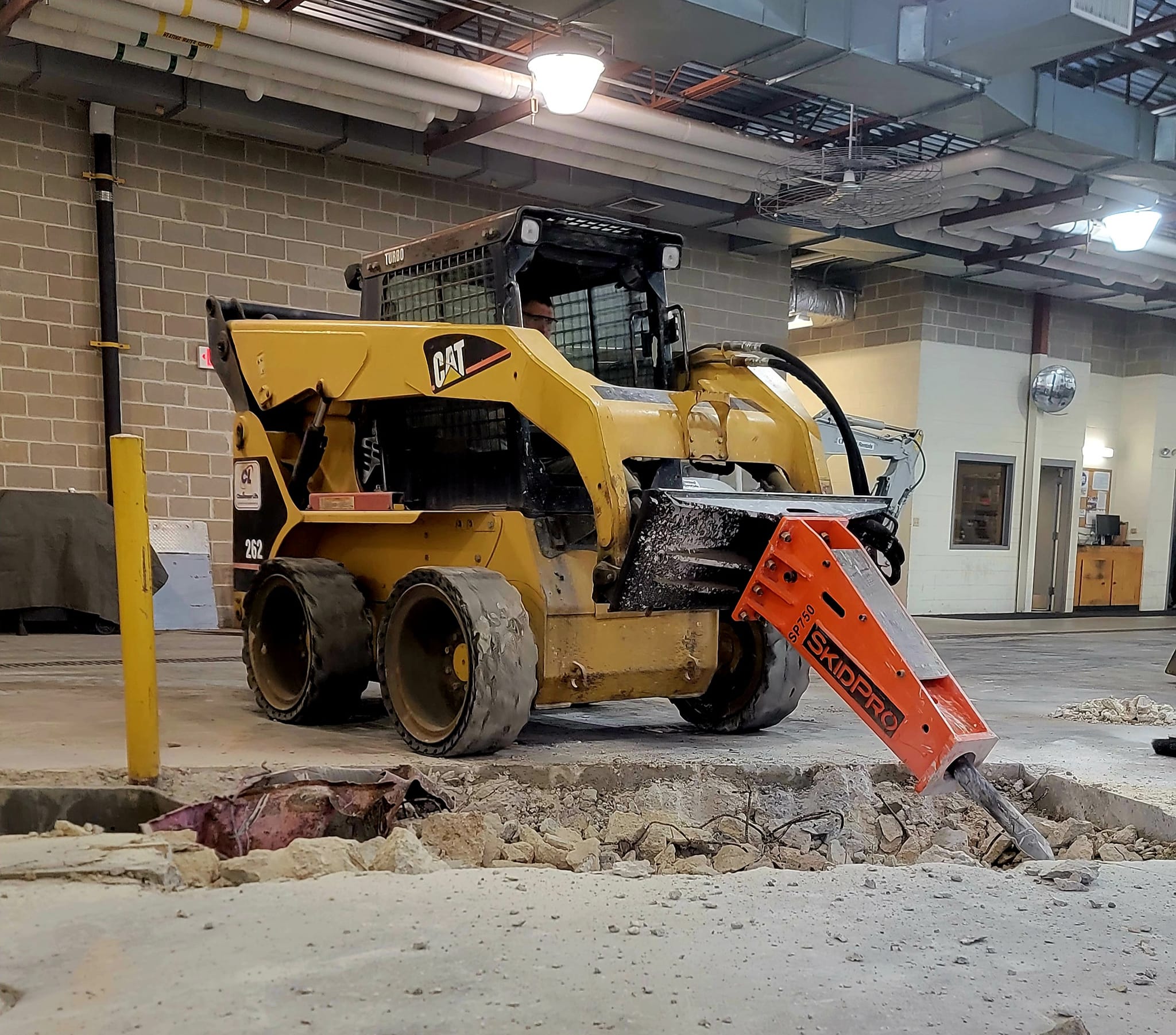
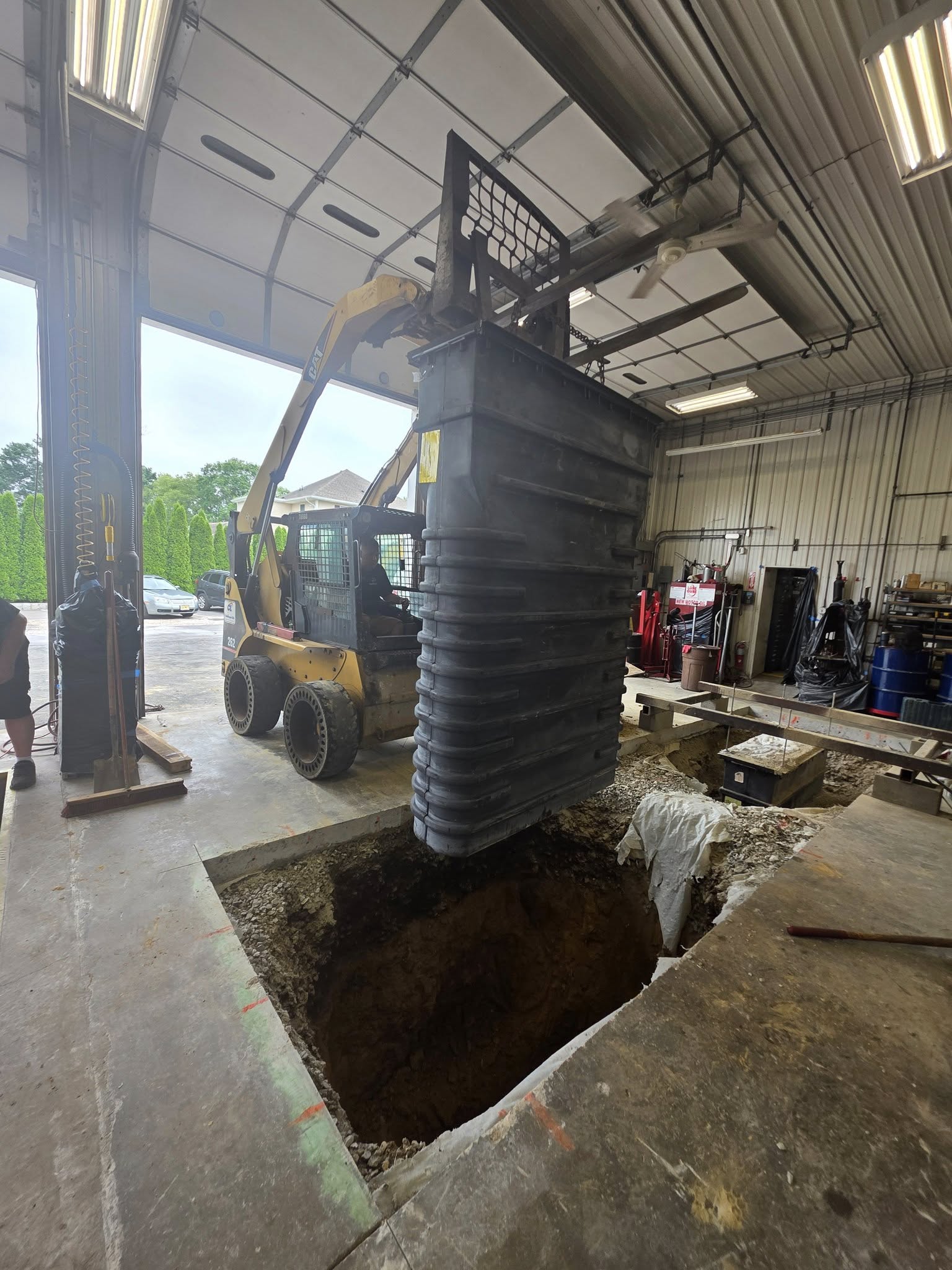
These are the most involved installs we do. Saw cutting, excavation with dig boxes, pit forming, reinforcement, drainage, hydraulic routing, a concrete pour, cure time, then the mechanical and electrical. It's a multi-day project and it needs to be done by people who've done it before — our crew is silica safety trained for the concrete work and OSHA 10/30 trained for the excavation. A GC who's never set a lift pit will cost you more in fixes than you saved.

The process:

  1. Site survey — Existing slab conditions, utility locations (water, sewer, electrical, air), drainage, structural constraints. New construction: we work with your GC directly to spec the pit.
  2. Saw cutting & excavation — Slab cut, concrete removed, pit excavated to depth. Dig boxes (trench shields) go in for any excavation at depth — OSHA requires cave-in protection at 5 feet (29 CFR 1926.652), and a competent person evaluates conditions on site. Most lift pits hit that depth. Dimensions are model-specific. No tolerance for "close enough."
  3. Forming & reinforcement — Steel-reinforced forms to manufacturer spec. Drainage, conduit runs, and hydraulic routing are integrated during forming — not patched in after the pour.
  4. Mechanical set — Carriages, cylinders, mounting hardware positioned and aligned in the pit. Scissor mechanisms assembled and calibrated in place.
  5. Hydraulic system — Power unit installed (usually in a separate mechanical room), lines run through conduit, system filled, bled, and pressure-tested.
  6. Pour & cure — Pit poured flush with existing floor, finished to grade, cured to spec. This takes time — there's no shortcut for concrete cure.
  7. Final assembly & test — Above-floor components (pads, arms, controls) installed. Full operational test under load.

Lift Types

TypeWhat It DoesWhere It Goes
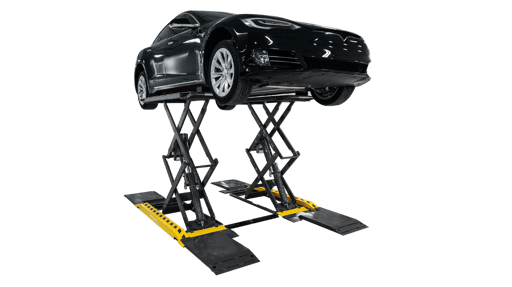
Scissor / parallelogramPlatform rises from flush pitDealership service lanes, quick lube
Frame-engagingArms engage frame from belowFull-service, heavy repair
Pad liftsPads rise under lift pointsHigh-volume service, tire shops
Full-riseFull standing-height from below floorCommercial service, fleet

Inground Models We Install

Challenger — EV1020 series (10K), EV1220 series (12K), EW12 series (wide-bay 12K). Complete kits or individual components (under-car units, hydraulic kits, conversion kits). Flush-mount in new or existing concrete.

Inground Installs


Concrete & Pad Work

A lot of lift installs start with concrete work. If the existing slab can't support what you're putting on it, we deal with it before we bolt anything down.

What we handle:

  • Slab demo: Saw cutting and removal of existing concrete that's cracked, too thin, or not reinforced. We don't anchor into bad concrete.
  • New pads: Pour a proper reinforced pad to spec for the lift going in — right thickness, right PSI, right rebar schedule. Sized and placed for the specific model.
  • Slab upgrades: Thickening, reinforcing, or resurfacing an existing floor to meet manufacturer requirements. Common in older buildings and converted spaces.
  • Pit work: Full excavation, forming, and pour for inground lifts. Covered in detail in the inground section above.
  • Pit abandonment: Filling and capping old inground pits when you're pulling a lift or converting a bay.

We assess the slab on every job. If it passes, we install. If it doesn't, we tell you what it needs and handle the concrete scope so you're not coordinating a separate contractor.


Lift Removal & Replacement

We pull out old inground lifts too. Drain the hydraulics, extract the mechanical, fill and cap the pit, or modify it for a new model. Same excavation standards as new installs — dig boxes, proper shoring, silica safety protocols for the concrete work. If you're swapping one out, we coordinate the removal and new install to keep your downtime short.

All fluid handling and disposal is coordinated with licensed waste haulers where required — hydraulic oil, waste fluids, affected materials. We handle the logistics so you don't have to.

This also covers above-ground lift removal — decommissioning a bay, pulling an old 2-post or 4-post that's past its service life, whatever needs to come out.


Our Crew

Owner Bo Fazio started Panther Lift after years in the automotive equipment industry watching shops get burned by companies that treated installation as an afterthought. We're not salespeople who sub out the install — we're the guys doing the work.

We sell Atlas and Challenger — both lines, full catalog. But we install more than what we sell. BendPak, Rotary, Forward, Mohawk, wherever the lift came from — if it needs to go in the ground or on a slab, we've done it. Factory-trained on Challenger and Rotary. Experienced with everything else.

Certifications & Training

C
Challenger Lifts
R
Rotary Lift
O
OSHA 10 & OSHA 30
C
CDL Class A
S
Scissor Lift Safety
S
Silica Safety
N
NJ Powered Industrial Lift Truck
Service Area

Service Area

Based in New Jersey. If you're within a reasonable drive, we'll come to you.

  • New Jersey — All counties — home base
  • Pennsylvania — Eastern PA
  • New York — Metro area and surrounding
Check Availability

Common Questions

2-post and 4-post: usually done in a day, 4–6 hours on site. Alignment racks take a full day — leveling and turnplate calibration add time. Inground: several days to a week depending on concrete work and cure time.

A 4-post service lift goes in a commercial shop — oil change bays, muffler shops, tire shops. It's for getting vehicles in the air to work on them. A storage lift goes in a home garage or collector building — it's for stacking cars to save space, not for service work.

If the ceiling height, slab, and electrical support it, yes. We check all three during the site assessment. Most home garages need at least 10 feet of ceiling, a 4" reinforced slab, and a 220V circuit. If any of those aren't there, we'll tell you what it takes to get there.

We demo the bad section, pour a proper reinforced pad to spec, and install once it's cured. We handle the full concrete scope — you don't need a separate contractor.

If the model supports it, yes. We retrofit turnplates and slip plates into compatible 4-post lifts. We'll check yours and tell you if it'll work.

That's most of what we do. We assess the slab, ceiling, and electrical first. If something doesn't meet spec, we tell you upfront and talk through options — including concrete work if the slab needs upgrading.

Varies by town. Electrical permits for 220V are common. Inground jobs may need excavation or structural permits. We'll tell you what's needed and work with your local inspectors.

Yes. We inspect and maintain everything we install. Required in most commercial settings and a good idea everywhere else. We also handle repairs — hydraulic issues, cables, mechanical problems.

Yes. Removal, pit abandonment, disposal. If you're replacing, we coordinate both jobs to keep your bay out of service as short as possible.

We sell Atlas and Challenger, but we install everything — BendPak, Rotary, Forward, Mohawk, you name it. If you already bought the lift or have a preferred brand, we'll put it in.

Can't find what you're looking for?

Questions?

Get an Estimate

Call or fill out the form. We'll assess your space, spec the right lift, and quote the full job — equipment, delivery, and install.

Get an Estimate